Slowly but surely, Hamilton is taking over the Internet.
The show started by taking over New York City during its off-Broadway run at the Public Theatre. When it transferred to Broadway, NY Times critic Ben Brantley noted that the show had been given “the kind of worshipful press usually reserved for the appearances of once-in-a-lifetime comets or the births of little royal celebrities.” (He also opened his review by noting that “yes, it really is that good.”)
However, excitement about the show was mostly confined to NYC. (After all, it had been six years since Lin-Manuel Miranda’s performance of the opening song at the White House went modestly viral) . But then, NPR streamed the original Broadway cast album a week before its release, giving the rest of the country access to its masterful score. Now everyone seems to be listening to the cast recording and talking about Hamilton. The New York Times, The Nation, and The Atlantic (amongst many others) have published features on the show. Women’s satirical websites are writing articles about it. Entire Tumblr pages have been created to curate fan art for specific characters and compare Hamilton to the history it depicts. The Internet decided that Parks & Recreation and Hamilton are soulmates and made a meme out of it (#ParksAndHam). I could go on but I’ve decided to talk less and smile more.
Why Is Everyone So Obsessed?
This show seems to be doing a million things right, starting with the phrase “Lock up ya daughters and horses, of course / it’s hard to have intercourse over four sets of horses.” But let’s step away from Lin-Manuel Miranda’s lyrical genius and wit for a moment and think about how amazing it is that cultural figures ranging from Beyonce and Dick Cheney are fans of this show.
I want to take a shot at consolidating the reasons for the diversity of its cultural appeal.

One of the first things people notice about the show is its multi-racial casting. “Our cast looks like America looks now, and that’s certainly intention,” as Lin-Manuel Miranda said in a New York Times feature. “It’s a way of pulling you into the story and allowing you to leave whatever cultural baggage you have about the Founding Fathers at the door.”
American history tends to be full of paradoxes (for example, the fight for independence being led by slaveowners). By using actors of color-- in particular black and Hispanic actors-- Hamilton re-contextualizes the Founding Father’s aspirations of freedom and equality and makes them relevant to today. According to one high school history teacher, Hamilton “transfers ownership of America’s ideals and ambitions from one generation to the next.” It transfer ownership, but also asserts that these historical American narratives are worth owning.
The show subtly comments on current political conversation—for example, Hamilton and Lafayette remind audiences that this country was built by immigrants with the line: “Immigrants—we get the job done.” The show’s anthem, “My Shot”, though explicitly about Hamilton’s aspirations to build America’s financial system and help shape the government, is subtextually in dialogue with the Black Lives Matter movement.
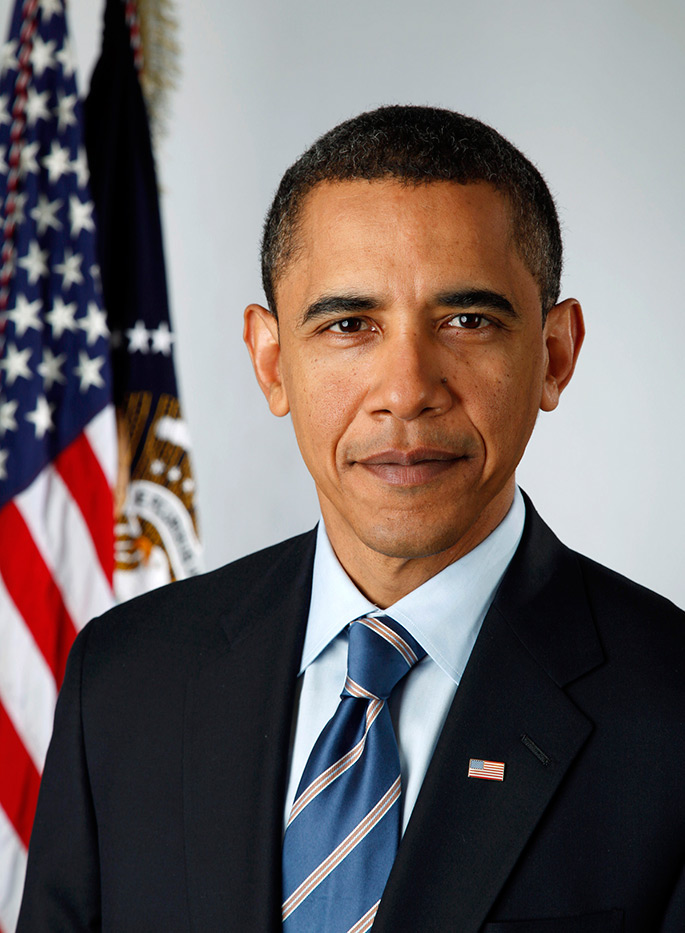
Hamilton has something for everyone, though, because it validates these contemporary social issues alongside traditional historical narratives. As Alisa Solomon writes, “Conservatives can revel in Hamilton’s role in creating American capitalism, with its credit system, banking, and stock market.” President Obama has even stated, “It is brilliant, and so much so that I’m pretty sure this is the only thing that Dick Cheney and I have agreed on during my entire political career.”

Another accomplishment of the show, usually presented as a separate from its political or historical importance, is Lin-Manuel Miranda’s ability to incorporate rap into musical theatre traditions. He clearly has a deep knowledge and love of American musical history (remember that time when Lin-Manuel Miranda was interviewed for 60 Minutes and talked about the dope beats in Camelot?), and many people have noticed that Hamilton includes quotes from musical writers ranging from Gilbert & Sullivan to Jason Robert Brown.
I think these two ideas-- revising American history, and revising musical theater-- are inextricably linked. A story with a Hispanic man playing Alexander Hamilton and a black actor playing George Washington wouldn’t be quite the same in a TV show or film. Hamilton resonates so strongly with American culture because it comes in the form of a Broadway musical, a purely American art form.
This is because everything that makes Hamilton so accessible in terms of content is also happening on the level of form. Hamilton is accessible to stodgy old white men and young minority social justice advocates alike because it subverts and re-contextualizes white narratives and structures through validating them and paying them homage. We can easily see this in the way the show revises history lessons. Let’s take a closer look at the importance of the color-blind casting on a formal level.
Re-Contextualizing Form: Race and the American Musical Theatre
Musical theatre, like jazz, is an art form that was created in America. Sure, it partially has its roots in the European opera tradition, but the integration of music, dance, and theatre to tell a story was developed in New York City. Rodgers & Hammerstein’s Oklahoma is commonly seen as the first Golden Age musical, and that’s a show that’s so American it might as well be wrapped up in apple pie and baseball.
Because musical theatre is so American, its history is closely intertwined with the history of race relations, an issue that tends to infiltrate every aspect of American life. The art form is rooted in opera, but an equally important influence is vaudeville, which itself emerged from minstrelsy. Minstrelsy is a racial entertainment built on a foundation of derogatory stereotypes of black people and pejorative racial humor, usually in the form of white actors putting on blackface and performing de-humanizing portrayals of black people for white audiences. This style is of course no longer acceptable, but its effect on shaping the American musical theater is undeniable. One of the earliest book musicals, Showboat, included black actors using blackface, as was the fashion at the time.
The Great “White” Way: Exclusion on Broadway
 The degradation of black people on the musical stage has, by contrast, allowed the elevation of “whiteness.” Theatre historian Warren Hoffman gave a fascinating lecture on this at the Library of Congress a few years ago, which you can watch here. (The lecture is almost an hour, and it’s so engaging that once you start you can’t stop, so you might want to wait till after you read this article to click on it.)
The gist of his argument (at least as it relates here) is that the the Broadway musical has historically perpetuated the American ideal that any talented individual who works hard enough can succeed. However, this is a myth because it only ever applies to white people. Hoffman cites 42nd Street as an example and points out that although the protagonist Peggy is seen as the hard working “everywoman” who eventually becomes a Broadway star, she is only ever played by white actresses.
The lecture is strikingly pre-Hamilton because Hoffman betrays an obsession with an internally consistent, diegetic logic behind colorblind casting. For example, he says the casting in 110 in the Shade is palatable because although Lizzy is black (played by Audra McDonald) and her father and brothers are white, the mother is never present, and one can assume Lizzy’s mother was black. However, he criticizes the interracial couple in a Kiss Me Kate revival, saying the dialogue in which the black man talks about his plans to run for President doesn’t make sense for the 1940s and pulls the audience out of the story. Hamilton, of course, has smashed every expectation (as we saw above), and I think it’s safe to say that Hoffman would agree that the casting enhances the show.
The Hamilton Casting Call: Black Meets White and White Meets Black
Hamilton subverts the idea that anyone can succeed on Broadway if they work hard enough, provided “anyone” is white, in the casting call alone. Many casting calls for American theatre either explicitly ask for white people, or claim to be open to colorblind casting but end up using predominantly white actors. The reasons behind this are complicated and structural, but the overall tendency to prefer white actors is undeniable.
The Hamilton casting call, though, sets forth the idea that anyone can succeed on Broadway if they work hard enough, provided “anyone” is non-white. The first word in the description of each main character (except King George, who provides comic relief and one could say functions as the token funny white guy) is “non-white”. This opens the door for non-white Broadway success stories-- the Peggy Sawyer (of 42nd Street) of people of color. Indeed, the NY Post recently published a story about how Daveed Diggs, who is double cast as Marquis de Lafeyette and Thomas Jefferson, went from couch surfing to starring on Broadway: the 20th century rags to riches story.
I don’t want to imply that Lin-Manuel Miranda is the first person ever to use “non-white” many times in a casting call. But what he does do that I believe is new (although correct me if I’m wrong) is cap off each description with “X meets Y”, in which X and Y are characters or figures from either (and this is speaking broadly) the world of musical theatre or the world of hip-hop / rap / R&B.
For example: the character Angelica Schuyler is describe as Nicki Minaj meets Desiree Armfeldt.


Nicki Minaj is a prominent rapper and songwriter; Desiree Armfeldt is a character is Stephen Sondheim’s 1973 musical A Little Night Music. By combining these two, Lin-Manuel Miranda is synthesizing a predominantly black style of performance with a predominantly white one.
There are very few black actors and characters (compared to the white figures) in the musical theatre canon, so Lin-Manuel primarily refers to traditionally white figures such as Elder Price and Harold Hill. However, rather than criticize (or even acknowledge) the racial homogeneity, he integrates them into the description of what he’s looking for in an actor. Sure, he wants a non-white actor to play Hercules Mulligan, but he can’t fully describe what he’s looking for without mentioning Donald O’Connor. Lin-Manuel subverts the systematic racism of Broadway casting while demonstrating a deep understanding and appreciation of the form and its history. His respectful synthesis pays homage to both rappers and famous musical roles (“Mos Def meets Javert”, “RZA meets Zach from A Chorus Line”).
Paying Homage to Musical Theatre
Lin’s understanding and appreciation are apparent well past his casting call. He also has stated explicitly in an interview that seeing theatre has helped him find a “common language” which affects how he creates his own art: “Big influences on this show are Sweeney Todd and Gypsy, musicals where there’s one character who blazes through the thing-- and every other character is affected or affects this character.”
This deep knowledge of musical theater made Lin aware of the work of John Weidman, librettist of Sondheim’s Pacific Overtures (amongst other shows). In February 2015, Lin tweeted the following:

This Tumblr post by cbrownjc breaks down how the original casts of Pacific Overtures (which features Asian actors playing white characters) and Hamilton are imperative to the shows themselves: “Both shows were written and designed - right down to their music - for a specific cast that helps in the deconstruction and subversion of the story it’s telling.”
In Hamilton’s case, the music used is, of course, hip hop and rap. And he incorporates these styles well: everyone from New York Times music critics to the Roots (who calls the show a “valid” and “credible” introduction to hip-hop) has been praising the hip-hop elements, and the way they integrate into the musical form.
But again, Lin integrates new elements that have their roots in minority groups and cultures without ever criticizing the musical art form or its problematic, exclusive history. In The Nation’s feature on how Hamilton is revolutionizing the Broadway musical, Alisa Soloman notes that Miranda “heaps adoration upon the American songbook while introducing a bunch of new pages. All those white (mostly Jewish) male songsters don’t have to be shoved aside so that Broadway can hear the rest of America singing.” He is subverting through celebrating what people have loved about the form for decades, which is why his show is so accessible.
Accessibility
The Roots said, “What hit me initially was the accessibility. It’s just really easy to follow the dialogue.” But the clarity of lyrics that makes the show understandable on a first listen is only one aspect of the show’s accessibility. This form is accessible to fans (and haters) of musical theater and rap alike. People who complain about musicals where characters start to sing for no reason are likely to get into this show which is all sung or rapped, so it lacks what can seem an artificial transition from speaking to music.
Hip-hop and rap, being subversive, are oftentimes critical of white society and structures, to put it lightly. (Think of the incendiary lyrics of early gangsta rap, like N.W.A’s “Fuck Tha Police”.) The rap in Hamilton isn’t trying to provoke or anger, though, which makes it accessible to conservative white audiences who might feel targeted by other forms of rap.
Hamilton responds to injustice with positivity. It re-contextualizes and enacts the the white bread American Dream with America’s actual racial and ethnic demographics. Its accessibility allows it to culturally resonate with a diverse group of people.
A show that can make everyone feel good in an age where some white conservatives see #BlackLivesMatter as a personal attack feels like a miracle. Look around the Internet, and enjoy the unbounded love for this show celebrating the talents of people of color.


No comments:
Post a Comment